News
Cosmology News
Cosmological tension confirmed

An international collaboration released new constraints on the value of the Hubble constant based on the study of strongly lensed quasars.
HIRAX Calibration Workshop

A workshop took place at ETH on October 29, organized by the bilateral Swiss-South African HIRAX calibration team.
Tommaso Boschi joins the Cosmology Research Group as a new data scientist

Please join us in welcoming Tommaso Boschi as a new data scientist in the Cosmology Research Group.
Amber Martinovits joins the Cosmology Research Group as a new Project Coordinator

Please join us in welcoming Amber Martinovits as a new events and project coordinator in the Cosmology Research Group.
Janic Fässler joins the Cosmology Research Group as a new apprentice

Please join us in welcoming Janic Fässler as a new apprentice in the Cosmology Research Group.
Marianna Papadionysiou joins the Cosmology Research Group as a new Software Developer

Please join us in welcoming Marianna Papadionysiou as a new software developer in the Cosmology Research Group.
First Light at the Vera C. Rubin Observatory

First images from the Rubin Observatory reveal millions of galaxies. A global celebration marks the launch of a 10-year cosmic survey.
The Cosmology Group at Fantasy Basel 2025

Dr. Michele Bianco opened the Space Stage at the famous Comic-Con event with a talk on the early universe and the 21-cm signal.
The Science Meeting: SKACH in Zurich
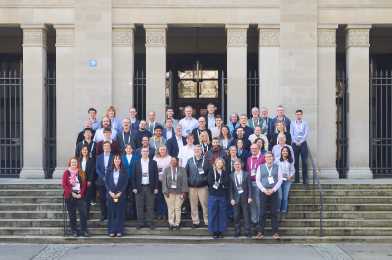
The Cosmology Group was delighted to co-organize and take part in the Science Meeting prior to the SKACH Consortium.
Measuring cosmic distances to understand the expanding universe

The group of Professor Alexandre Refregier uses the data collected by ambitious surveys to work out the nature of dark matter, dark energy and our expanding universe.
Laura Reymond joins the Cosmology Research Group as a new PhD Student

Please join us in welcoming Laura Reymond as a new PhD student in the Cosmology Research Group.
The DESC Collaboration Meeting

The DESC Collaboration Meeting was held at ETH Zurich from the 8th to the 12th of July, 2024.
New Members of the Cosmology Research Group
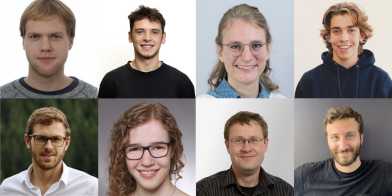
In the last years, the Cosmology Research Group has welcomed new members. Please join us in welcoming them!
Second Edition of the LMU-ETH Workshop
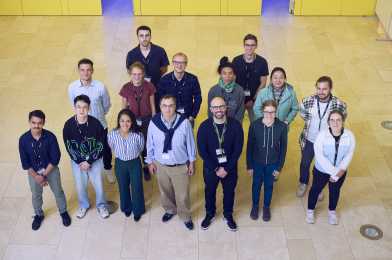
The 2nd edition of the joint LMU-ETH workshop was held at ETH Zurich from the 11th to the 13th of September.
Cosmology Research Group at the Scientifica 2023
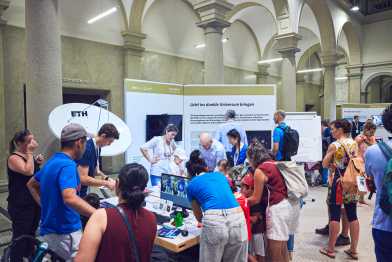
On 2 and 3 September up to 30,000 visitors sought answers to the question: what holds the world together?
Cosmological simulation suite CosmoGridV1
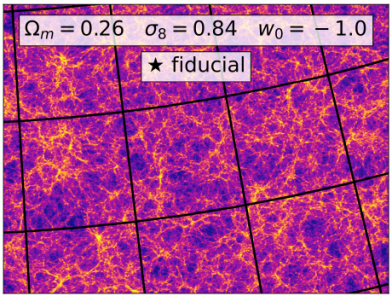
CosmoGridV1 is a large lightcone simulation set for map-level, simulation-based cosmological inference with probes of large scale structure. It is designed for practical parameter measurement with Stage-III survey data and Machine Learning inference. It contains 2500 unique cosmological models spanning different combinations of 6 cosmological parameters and is publicly available at www.cosmogrid.ai.
Sara Aliqolizadehsafari the Cosmology Research Group as a new data scientist
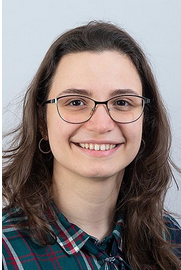
Please join us in welcoming Sara Aliqolizadehsafari as a new data scientist in the Cosmology Research Group.
Virginia Ajani joins the Cosmology Research Group as a new Postdoc
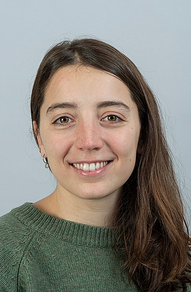
Please join us in welcoming Virginia Ajani as a new Postdoc in the Cosmology Research Group.
Silvan Fischbacher joins the Cosmology Research Group as a new PhD Student
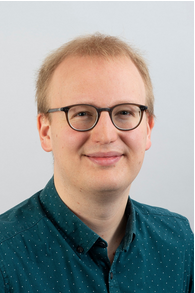
Please join us in welcoming Silvan Fischbacher as a new PhD Student in the Cosmology Research Group.
Pascal Hitz joins the Cosmology Research Group as a new PhD Student
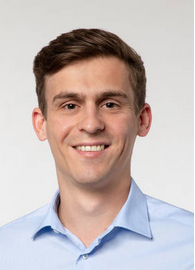
Please join us in welcoming Pascal Hitz as a new PhD Student in the Cosmology Research Group.
Arne Thomsen joins the Cosmology Research Group as a new PhD Student
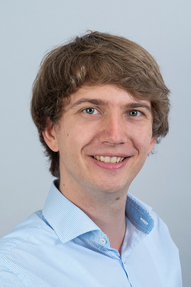
Please join us in welcoming Arne Thomsen as a new PhD Student in the Cosmology Research Group.
Alexander Reeves joins the Cosmology Research Group as a new PhD Student
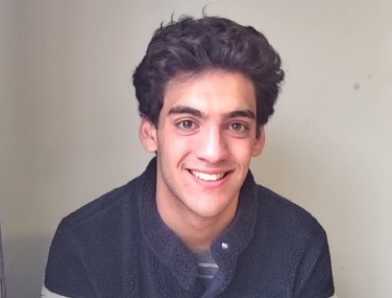
Please join us in welcoming Alexander Reeves as a new PhD Student in the Cosmology Research Group.
Marta Spinelli joins the Cosmology Research Group as a new Postdoc
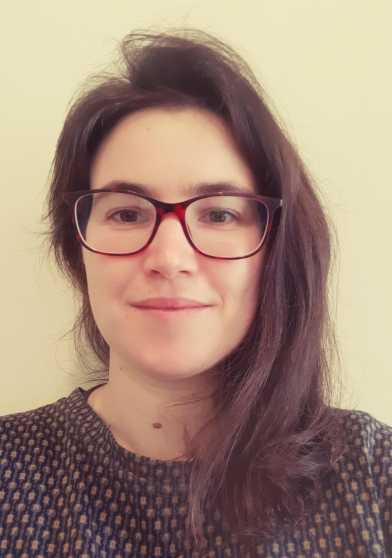
Please join us in welcoming Marta Spinelli as a new Postdoc in the Cosmology Research Group.
Interactive Cloud Cosmology with PyCosmo and the PyCosmoHub

PyCosmo is a Python-based framework providing theoretical predictions for cosmological analyses. It is unique in its interactive, user-friendly interface, the PyCosmo Hub. Being fast and accurate, PyCosmo represents a powerful research tool in the new era of collaborative precision Cosmology.
Measurement of the Galaxy Luminosity Function with Approximate Bayesian Computation

The combination of Approximate Bayesian computation and forward-modeling of the Canada-France-Hawaii Telescope Legacy Survey data allowed a new robust estimate of the B-band Galaxy Luminosity Function
Devin Crichton joins the Cosmology Research Group as a new Postdoc

Please join us in welcoming Devin Crichton as a new Postdoc in the Cosmology Research Group.
Recently defended PhD thesis

Martina Fagioli successfully defends her PhD thesis
Christiane Stefanie Lorenz joins the Cosmology Research Group as a new Postdoc

Please join us in welcoming Christiane Stefanie Lorenz as a new Postdoc in the Cosmology Research Group.
Beatrice Moser joins the Cosmology Research Group as a new PhD student

Please join us in welcoming Beatrice Moser who completed her Master degree at ETH Zurich and joined our group in September 2019 as a new PhD student.
Recently defended PhD thesis

Jörg Herbel successfully defends his PhD thesis
ETH News
Electrons lag behind the nucleus

Researchers at ETH Zurich have shown, for the first time with very high time and spatial resolution, that electrons in certain two-dimensional materials only follow the motion of the atomic nuclei with a delay. This insight could lead to the development of novel electronic devices in the future.
Longest observation of an active solar region

In May 2024, the strongest solar storm in twenty years raged. An international team led by ETH Zurich observed it. Their findings are now helping to improve space weather forecasts.
In memoriam: Konrad Osterwalder, former Rector and Interim President

Konrad Osterwalder was Rector of ETH Zurich from 1995 to 2006, and also served as Interim President during a difficult period. He played a central role in making ETH Zurich an open, international and innovative university and was a gifted teacher and mentor. He sadly passed away on 19 December at the age of 83.
A molecular gatekeeper that controls protein synthesis

For years, ETH researchers have been investigating a molecular complex that plays a key role in protein synthesis. They have now discovered that this complex also contributes a crucial function in ensuring that our DNA is properly processed and “packaged”.
Daniela Zetti, how will 2025 go down in history?

The Head of the Archives of Contemporary History at ETH Zurich contemplates how events become “historic” and reaches some surprising conclusions about 2025.
Looking back at ETH Zurich’s 2025

Engineers, biomedical researchers, computer scientists, and many other members of the ETH Zurich community have made great strides in research and teaching. Here is a brief review of an eventful year.
“Quantum technology will be part of our everyday lives in ten years”

In part two of the interview marking the 100th anniversary of quantum mechanics, ETH Professor Klaus Ensslin explains why quantum technology is developing at such a rapid pace at the moment and why Switzerland needs to make an effort if it doesn’t want to be left behind.
“Quantum mechanics upended our thinking”

Three quantum researchers were presented with the Nobel Prize in Stockholm on 10 December. Meanwhile, this year marked the centenary of quantum mechanics as a field of research. In this two-part interview, ETH Professor Klaus Ensslin looks back at its beginnings and talks about where the technology is headed.
Earthquakes on tap

In a former service tunnel built for the Furka-Gotthard rail link, ETH geoscientists are looking to move mountains. We take a closer look at the underground lab.
Building bridges for ETH alumni

Ruedi Hofer was as surprised as anyone to be appointed the new President of the ETH Alumni Association.
Drone wars

Robotics pioneer Roland Siegwart and philosopher Nadia Mazouz discuss dual-use technologies, drone warfare in Ukraine and whether universities should one day engage in military research.
Swarm intelligence

ETH students on a project-based programme are developing underwater robots that can think and act collectively. It’s the perfect opportunity to see how research and technology can dovetail with teamwork.
Getting a grip: AI and robotics

While machine learning has long been a cornerstone of robotics, the latest AI revolution is reshaping how robots are taught. Cloud-based simulations have made training faster and more efficient than ever.
Alpine advocate

Having studied architecture at ETH, Franziska Biner now serves as a member of the Valais cantonal government. A native of a mountain village, she works to promote the interests of people in Switzerland’s Alpine regions.
"It’s always fascinating to look into a crystal ball”

Statistician Johanna Ziegel is a great believer in numbers and their power to predict the future. Away from work, though, she’s learned not to plan for every eventuality.
The Alps to lose a record number of glaciers in the next decade

How much longer will glaciers survive? A new study from ETH Zurich researchers offers the first detailed projection of how many glaciers could vanish by 2100 due to global warming – and why regions such as Switzerland will be most affected. This approach could also help policymakers, the tourism industry and natural hazard management plan for the future.
UN-ETH Partnership gaining momentum

The UN-ETH Forum held in Zurich at the end of October demonstrated how researchers can contribute their expertise and know-how to international political issues. Various ongoing projects already illustrate the effectiveness of this cooperation.
Taras Gerya, how can we ensure the long-term survival of human civilisation?

For geodynamicist Taras Gerya, one thing is clear: our highly developed civilisation is the only one in the entire galaxy and therefore all the more worthy of preservation. To develop approaches for its protection, he has co-founded a new interdisciplinary field of research.
Sowing, harvesting, sorting: robots learn permaculture

During this year’s “Innovation Project”, mechanical engineering students built robots that can cultivate a model-scale permaculture garden. In the final, on 16 December, the best teams will demonstrate how their autonomous systems sow, harvest and deliver fruit sorted by variety.
"The European Research Council needs our support"

ETH Professor Nicola Spaldin will soon take over one of the Vice Presidencies of the European Research Council. In this interview, she explains what the role means for her as a researcher, and what it means to her personally.
A Trojan horse for artificial amino acids

Researchers from ETH Zurich have succeeded in introducing large quantities of unnatural amino acids into bacteria, enabling the creation of innovative and highly efficient designer proteins. These can be used as more efficient catalysts or more effective drugs.
Four researchers awarded prestigious European Consolidator Grant

In the latest allocation of European funding for cutting-edge research, ETH Zurich scientists have performed exceptionally well. Here, we present the projects that will receive several million euros in funding.
Farewell after three decades of light and leadership at ETH Zurich

Ursula Keller, Professor of Physics at ETH Zurich, will deliver her farewell lecture on Monday, 15 December 2025. Her talk, entitled “Ultrafast science: a 32-year journey in Physics at ETH Zurich,” marks the close of more than three decades at the forefront of ultrafast laser science – a field she helped build from the ground up.
Inclusive housing arrangement makes for better ETH engineers

In Switzerland’s first inclusive 'ParaWG'-flatshare, students from ETH Zurich live alongside people with spinal cord injuries. It is hoped that the students will draw on this experience to help make the world more accessible for disabled people.
“The question of the value we place on human rights is a central issue”

Gregor Spuhler has headed up the Archives of Contemporary History (AfZ), home to important historical resources, for 18 years. In this interview, he talks about what he thinks about Nazi comparisons and why Switzerland needs a memorial for the victims of National Socialism right now.
Eleven professors appointed

At its meeting of 3 and 4 December 2025 and upon application of Joël Mesot, President of ETH Zurich, the ETH Board appointed eleven professors. In addition, seven adjunct professorships were awarded.
How influenza viruses enter our cells

For the first time, researchers have observed live and in high resolution how influenza viruses infect living cells. This was possible thanks to a new microscopy technique, which could now help to develop antiviral therapies in a more targeted manner.
What fire safety specialists study in ETH’s continuing education programme

Beginning in 2027, fire safety engineering will be planned more precisely as new regulations are introduced. ETH Zurich trains engineers by applying principles of physics and conducting experiments in a fire simulator.
Spark Award 2025: from pollutant to raw material

The prize for the most promising invention developed at ETH Zurich last year has been awarded to a research team from the Laboratory of Organic Chemistry. The scientists received the Spark Award 2025 for a novel process for converting common global pollutants into industrial raw materials.
“Protecting our knowledge means protecting our academic freedom”

War in Europe, the escalating rivalry between the USA and China - the rapidly shifting geopolitical situation is focussing more than ever on the question of how Swiss universities will be able to protect their knowledge.